
You are rushing out the door for school or work, you hit the button on your garage door opener, and nothing happens. Maybe the door groans halfway up and freezes. Or worse, it slams shut like it is angry at you. If that has ever happened at your home in Rosenberg, Sugar Land, or nearby areas, you are not alone. At Covey Trails Garage Doors Co., we see this exact moment all the time, and we know how stressful it feels when your garage door will not cooperate.
Garage door troubleshooting is not about being a master mechanic or owning a giant tool shop. It is about learning a few simple checks that help you spot common problems fast. Many garage door issues have clear warning signs, and when you understand them, you can decide whether it is a quick fix you can safely handle or something that needs a trained technician. That is what this guide is for.
Here is a real-world example from a call we handled near the Southwest Freeway. A homeowner thought their opener was broken because the door would not move. But when our technician arrived, he found a simple issue: the photo eye sensors were bumped out of line by a bicycle. After a quick reset and cleaning, the door worked perfectly again. The homeowner was relieved, but also said, “I wish I had known to check that first.” This article is basically that wish coming true for beginners.
Another reason this topic matters is safety. A garage door is the largest moving object in most homes. It weighs hundreds of pounds, and it runs on high-tension springs and cables. Even a small mistake can cause injury if you do not know what you are looking at. That is why we explain every step in a calm beginner beginner-friendly way, the same way a good inspector would teach a new member of a building community. Think of it like a friendly forum where people share knowledge, offer support, and say public thanks when someone helps them solve a problem. You are welcome here.
Finally, garage door problems do not just waste time. They can damage your opener, bend tracks, or shorten the lifetime of your whole garage door system. Trouble that starts small can grow fast. A little troubleshooting today can save you big repairs tomorrow.
Why Garage Doors Act Up in the First Place
Before you start fixing anything, it helps to know why garage doors are so picky.
A garage door system has several parts working together: panels, rollers, tracks, hinges, springs, cables, sensors, and the opener. If one part slips out of place, the rest of the system struggles. A strong wind can push a door slightly off track. Old rollers can wear down. Springs lose tension over the years. Dirt or ice can block movement. Even a small change in the building code style of your garage, such as a new pedestrian door size or a modified header, can affect how smoothly the door runs.
In construction terms, your garage door is like a little building in motion. It must stay balanced, aligned, and supported at all times. When something changes, the door notices.
Tools You Might Need
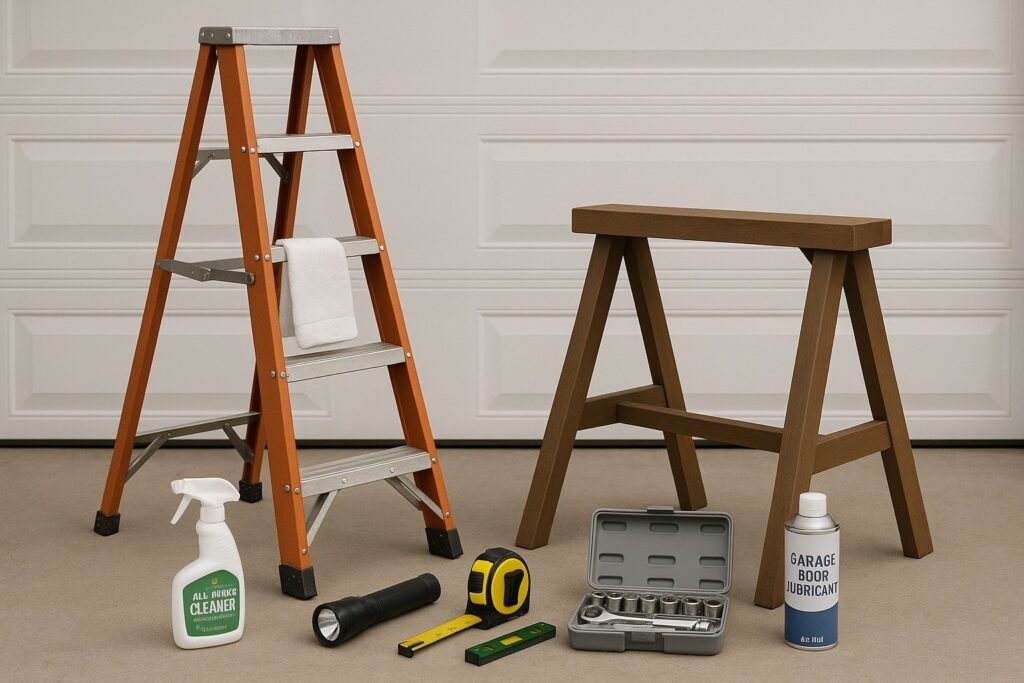
You do not need a truck full of gear. Most beginner troubleshooting uses basic items you may already have:
- A sturdy ladder
- A clean cloth
- Mild household cleaner
- A flashlight
- A tape measure
- A level if you have one
- A socket wrench set or screwdriver
- Garage door lubricant
- A sawhorse is used if you are removing panels or supporting a section, but only for safe, low-tension work
Important safety note: Do not use tools on springs, cables, or bottom brackets. Those parts are under high tension. Beginners should never loosen or remove them. That job is for trained technicians.
Step One: Check for Simple Power and Control Issues
Start with the easiest stuff. You would be surprised how often the fix is here.
Check the Remote Batteries
If the remote is not working, try the wall button. If the wall button works but the remote does not, replace the batteries.
Check the Opener Power
Look at the opener unit on the ceiling. Is it plugged in? Did a breaker trip? Check your electrical panel. Sometimes, a GFCI outlet in the garage trips and shuts off power.
Check the Lock or Vacation Switch
Some wall controls have a lock button. If that light is on, it disables the remote. Turn it off and test again.
Check for Reset Needs
If your opener has a blinking light or makes a clicking sound, it might need a reset. Unplug it for 30 seconds and plug it back in.
These checks might feel too simple, but even long-time sawhorse members of home improvement forums like mtlogcabin or Vegas Paul Silver would tell you that beginners should always start with the basics first.
Step Two: Inspect the Safety Sensors
Photo eye sensors are one of the most common causes of garage door trouble.
They sit near the bottom of the tracks on both sides. Their job is to stop the door if something crosses the beam, like a kid, pet, or bike.
What to Look For
- A blinking sensor light
- Dirt, spider webs, or dust on the lens
- One sensor is pointing slightly away from the other
- Boxes, yard tools, or trash cans are blocking the beam
What to Do
- Clean both lenses with a soft cloth.
- Remove anything blocking the beam.
- Check that both sensors aim directly at each other.
- If one is loose, gently tighten its wing nut or bracket.
If the lights are solid and the door still reverses for no reason, you may have wiring issues. That is a time to call a professional.
Step Three: Look for Track Problems
Tracks guide the door smoothly. If they bend, loosen, or collect debris, the door will not move right.
Signs of Track Trouble
- Door shakes or jerks during movement
- Loud scraping noises
- Visible dents or bends
- Rollers popping out
- Door stops halfway
What to Do
- With the door closed, inspect both tracks.
- Use a flashlight to look for dirt, bolts sticking out, or damage.
- Tighten loose track brackets carefully with a wrench.
- Wipe down dirty tracks. Do not grease tracks. Lubricant belongs on rollers and hinges, not track surfaces.
If tracks are bent badly, do not hammer them back. That can make alignment worse. Call a trained technician.
Step Four: Check the Rollers and Hinges
Rollers let the door glide. Hinges connect the panels. When rollers wear down, the door becomes noisy and uneven.
Signs of Roller Issues
- Squealing or grinding sounds
- Door moves unevenly
- Visible cracks or chips in roller wheels
What to Do
- Look at the rollers one by one.
- If they are nylon and cracked, they may need replacement.
- Add a small amount of garage door lubricant to roller bearings and hinge pivot points.
- Test the door again.
Lubrication is a simple maintenance step that can greatly improve smooth operation.
Step Five: Test Door Balance
A well-balanced door stays in place when lifted halfway. If it drops or shoots up, the springs may be losing tension.
How to Test Balance Safely
- Close the door fully.
- Pull the emergency release cord to disconnect the opener.
- Lift the door by hand until it is about halfway open.
- Let’s go carefully.
What Results Mean
- Door stays in place: balance is good.
- Door drops quickly: springs are weak or failing.
- Door rises on its own: springs may be too tight.
Do not adjust springs yourself. Springs are high tension, and wrong handling can cause serious injury. Even a silver member like bill1952 sawhorse paul with plenty of code knowledge would tell you this is not a beginner task.
Step Six: Listen for Spring Problems
Springs lift the weight of the door. If a spring breaks, the opener may struggle or the door may not move at all.
Signs of a Broken Spring
- Loud bang from the garage, like a firecracker
- Door feels extremely heavy
- Door lifts a few inches, then stops
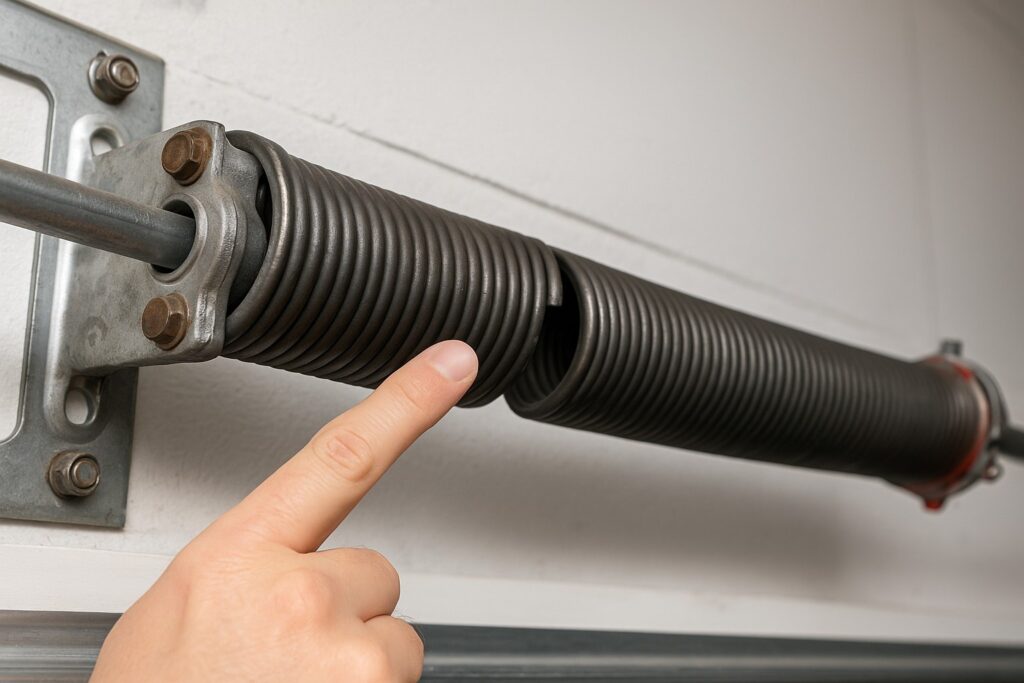
- Visible gap in the torsion spring above the door
What to Do
Stop using the opener. A broken spring can make the opener burn out. Call a technician right away. This is one of the most dangerous garage door repairs.
Step Seven: Inspect Cables Carefully
Cables work with springs to lift the door. If they fray or slip off, the door will tilt or jam.
Signs of Cable Trouble
- Door lifts unevenly
- One side looks lower
- Frayed wires near the bottom
- Cables are loose on the drum
Do not touch cables if they look damaged. This is another high-tension area.
Step Eight: Check the Opener Drive System
If the door is balanced but still will not move with the opener, the opener drive might be the issue.
Types of Drives
- Chain drive
- Belt drive
- Screw drive
What to Look For
- Chain hanging loose
- Belt is cracked or slipping
- Screw drive covered in dirt or dry
What to Do
- Inspect for obvious loose parts.
- Tighten chain tension only if your manual says it is safe.
- Lubricate the crew drive lightly if needed.
- If the motor runs but the door does not move, the gear inside may be stripped.
Gear replacement is usually professional work.
Step Nine: Fix Small Door Panel Issues
Sometimes the problem is not mechanical, but structural.
Signs of Panel Trouble
- Panel looks bowed
- Hinges pulling away
- Door rubs against the frame
If a panel is loose, tighten hinge screws. If the screws will not hold, the wood framing behind might be weak, and you may need reinforcement. This is common in older garages near high desert-style heat shifting, where wood expands and contracts. If the garage door headers are weak or cracked, that needs professional support, especially if building code changes are involved.
Step Ten: Watch for Weather-Related Problems
Texas weather swings can mess with a garage door.
Common Weather Issues
- Humidity swelling wood doors
- Dirt or wind-blown debris in tracks
- Ice on the floor in rare cold snaps
- Heat warps panels slightly
- Rubber seals are sticking to the concrete
What to Do
- Clean tracks and seals.
- Replace worn weather stripping if drafts or pests enter.
- Make sure the bottom seal is not glued down by dirt or moisture.
- If the opener strains only in heat or cold, check lubrication and balance.
Energy efficiency matters too. A tight door seal helps your HVAC system, improves comfort, and supports Energy savings.
Step Eleven: Know When to Stop and Call for Help
Troubleshooting is about smart limits. You can safely clean sensors, tighten loose bolts, lubricate rollers, and check power. But you should stop if you see:
- Broken springs
- Frayed cables
- Door off track
- Bent tracks you cannot realign gently
- Opener smoke or burning smell
- Door slamming shut
- Any part that makes you nervous
That is not a weakness. That is wisdom.
In a good community of homeowners, whether you are a bronze member or a lifetime sawhorse CDA, the rule is simple: do what is safe for you, and trust experts for high-risk repairs.
Simple Preventive Maintenance for Beginners
Once your door is working, keep it that way.
Monthly Quick Check
- Clean sensors
- Wipe tracks
- Lubricate rollers and hinges
- Look for loose screws
Seasonal Checks
- Test balance
- Inspect weather seals
- Listen for unusual noises
Yearly Tune Up
A professional tune-up catches hidden issues early. At Covey Trails Garage Doors Co., we check tension, alignment, opener force settings, and safety features to prevent costly repairs later.
Troubleshooting Quick Reference List
Here is a fast summary:
- Door will not open: check power, remote batteries, lock button, springs
- Door reverses: check sensors and beam blockage
- Door is noisy: lubricate the rollers and hinges
- Door stops halfway: check tracks, rollers, balance
- Door lifts unevenly: cables, rollers, track alignment
- Opener runs, but door does not move: drive system or gear issues
- Door is heavy: spring problem
Keep this list handy, like a friendly search welcome guide you would see pinned at the top of a helpful forum. It saves time.
Frequently Asked Questions (FAQs)
1. Why does my garage door open slowly even after lubrication?
Slow opening can happen when the opener’s force settings are too low, or the motor is aging and losing power. It can also mean the door weight is creeping up due to worn springs, so a technician should test the lift system.
2. Can a power surge damage a garage door opener permanently?
Yes, a surge can fry the circuit board or logic unit inside the opener, causing random failures or total shutdown. Using a surge protector or having the opener inspected after a storm can prevent bigger problems.
3. How do I know if my garage door size or setup is causing repeated issues?
If your door feels unstable, rubs the frame, or has frequent track misalignment, the door may be the wrong size for the opening, or the framing may be out of square. This is common after remodeling or if the original header framing was not built to current standards.
4. Is it normal for my garage door to work fine by hand but fail with the opener?
That often points to opener settings, a worn drive gear, or a mismatch between door weight and opener strength. A balanced door should not strain the opener, so a professional can check both the motor system and door load.
Final Thoughts
Garage door troubleshooting does not have to be scary. With a few safe checks, you can solve many simple garage door problems on your own. Start with the basics like power and sensors. Then inspect tracks, rollers, and lubrication. Test balance carefully, and watch for warning signs like broken springs or frayed cables. Most importantly, always choose safety over guessing. A garage door system is strong and useful, but it demands respect.
If you stay consistent with small maintenance steps, your door will last longer, run quieter, and protect your home better. And if something looks dangerous or confusing, do not wrestle with it. That is what professionals are for.
How Can Covey Trails Garage Doors Co. Help You?
If your garage door is still acting up, or if you found a problem that should not be handled by a beginner, our team is ready to help. Covey Trails Garage Doors Co. proudly serves Rosenberg, Sugar Land, and surrounding Texas communities with fast, reliable service. Whether you need a full garage door repair, broken spring replacement, opener troubleshooting, track realignment, or a brand new custom installation, our trained technicians bring the right tools, deep experience, and a commitment to quality on every job.
We know that a stuck garage door can ruin your whole day. That is why we focus on clear communication, safe repairs, and friendly service that makes homeowners feel supported from start to finish. You do not have to figure it out alone.
Call Covey Trails Garage Doors Co. today at (832) 345-9267 or visit us at Southwest Fwy Unit A, Sugar Land, TX 77479. You can also book online here.
Let us take care of your garage door problems so you can get back to what matters most.
- Step-by-Step Garage Door Troubleshooting for Beginners
- Garage Door Repair Costs Explained: What Homeowners Should Expect in 2025
- Everything You Need to Know About Automatic Garage Doors in Rosenberg, TX
- Everything You Need to Know About Garage Door Opener Repair in Rosenberg, TX
- Everything You Need to Know About Garage Door Tune-Ups in Rosenberg, TX